Wi-Fi employee access for HPE Aruba Networking Central
In this topic, you will learn how to configure access points managed by HPE Aruba Networking Central to work together with Portnox™ Cloud for 802.1X, MAC-based, and IPSK authentication of Wi-Fi connections.
Before you begin, make sure that:
-
Your access points are onboarded, assigned to a site, and managed by the new HPE Aruba Networking Central.
-
The site has an address with a country. By default, the AP System profile takes the country code from the site address. Without a country code, the radios of the access point stay disabled. You can also create an AP System profile for the site and select the country in the Country Code field.
-
Access points that were previously managed by Classic Central are in a Classic Central group with the Allow New Central to overwrite all configurations for this group option selected. Otherwise, the access point keeps broadcasting the SSIDs from its Classic Central group. When you move the access point to such a group, it loses all configuration from the Classic Central group.
Create RADIUS server profiles
In this section, you will create authentication server profiles for the Portnox™ Cloud RADIUS servers, and add them to an authentication server group. You will use this server group later when you configure your SSIDs.
-
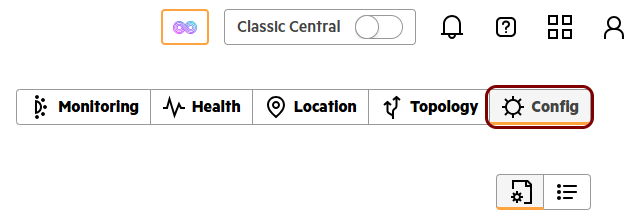
In HPE Aruba Networking Central, click on the Config tab in the top-right corner.
-
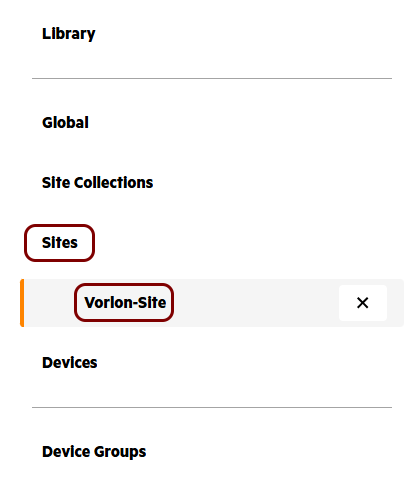
In the left-hand side menu, click on the Sites option, and then click on the name of your
site.
-
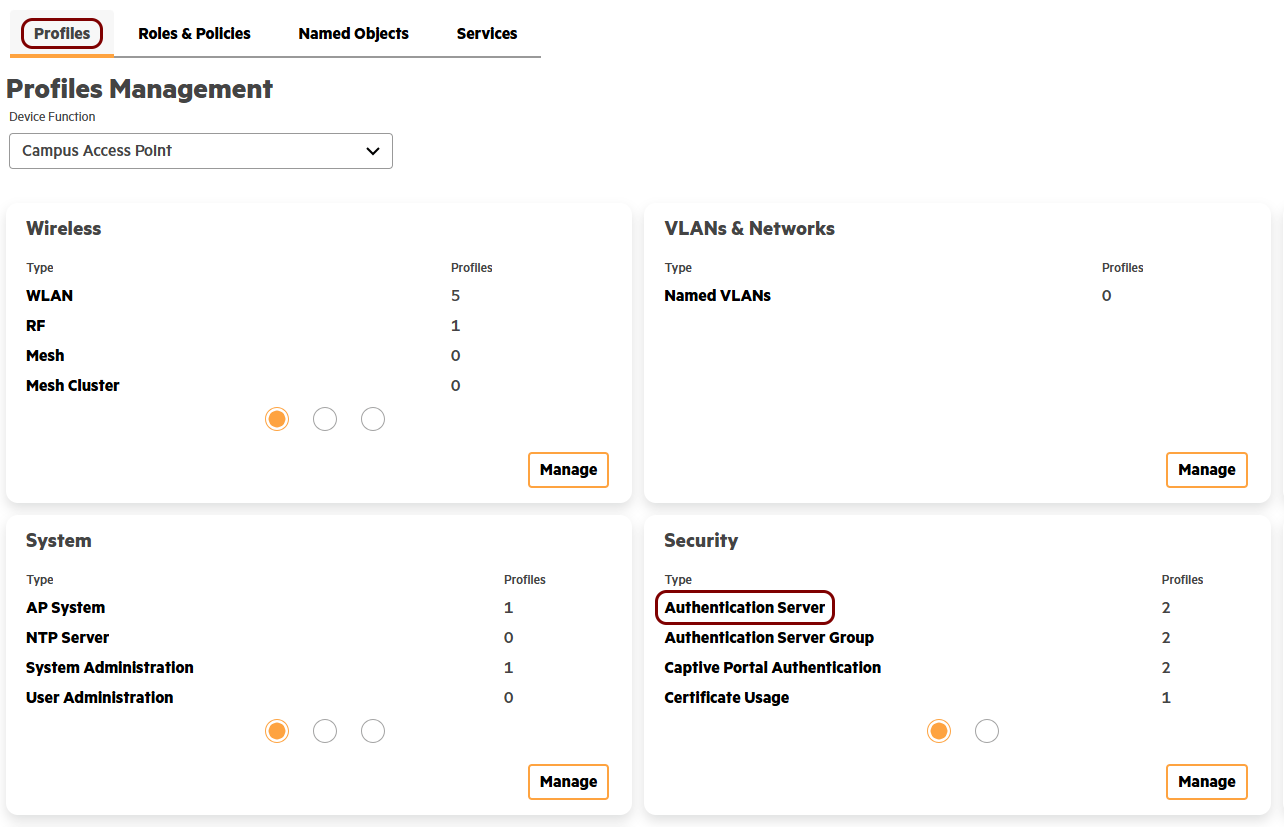
On the Profiles tab, in the Profiles Management pane, click on the
Authentication Server entry in the Security card.
-
Click on the Create Profile button to create a new authentication server profile.
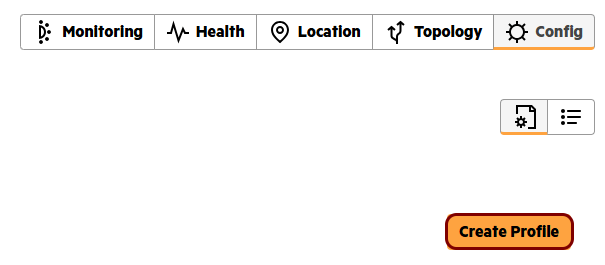
-
Configure the new authentication server profile:
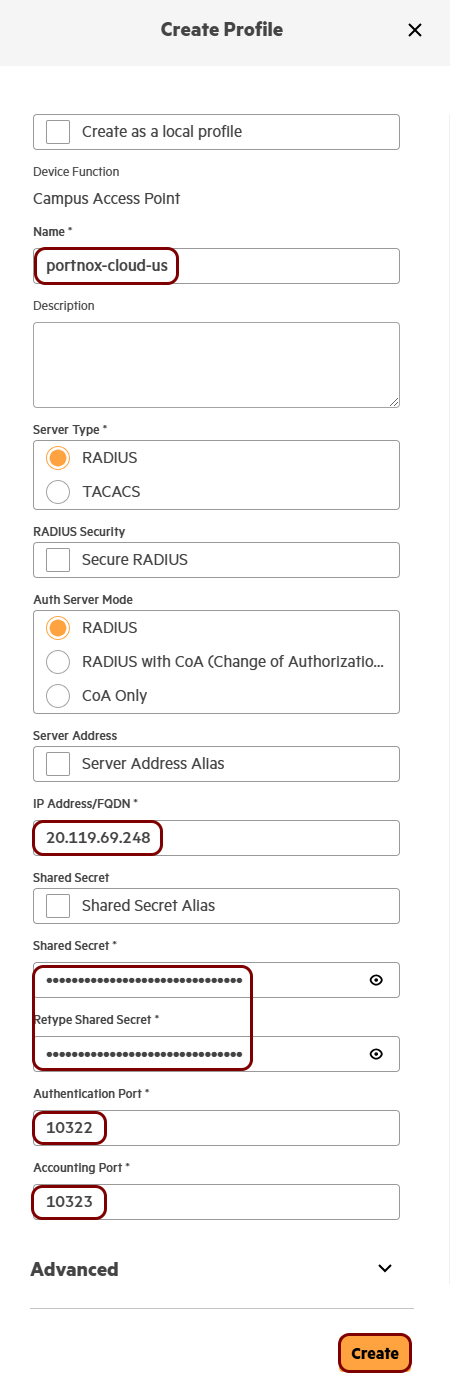
- In the Name field, enter a name for this server.
- Leave the Secure RADIUS checkbox cleared, and leave the RADIUS option selected in the Server Type and Auth Server Mode fields.
- In the IP Address/FQDN field, enter the Cloud RADIUS IP value from Portnox Cloud.
- In the Shared Secret and Retype Shared Secret fields, enter the Shared Secret value from Portnox Cloud.
- In the Authentication Port and Accounting Port fields, enter the Authentication port and Accounting port values from Portnox Cloud.
- Click on the Create button.
-
Click on the Security entry in the breadcrumb.
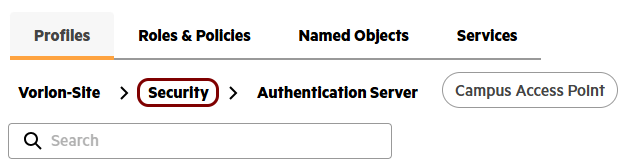
-
In the Profiles Management pane, click on the Manage button in the
Authentication Server Group card.
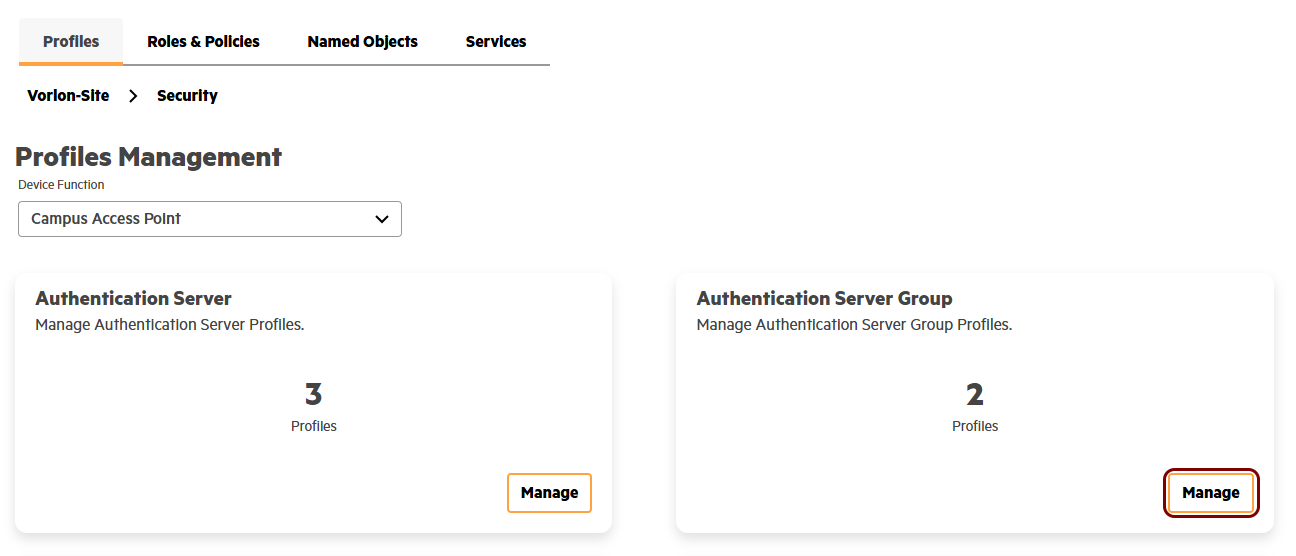
-
Click on the Create Profile button to create a new authentication server group.
-
Configure the new authentication server group:
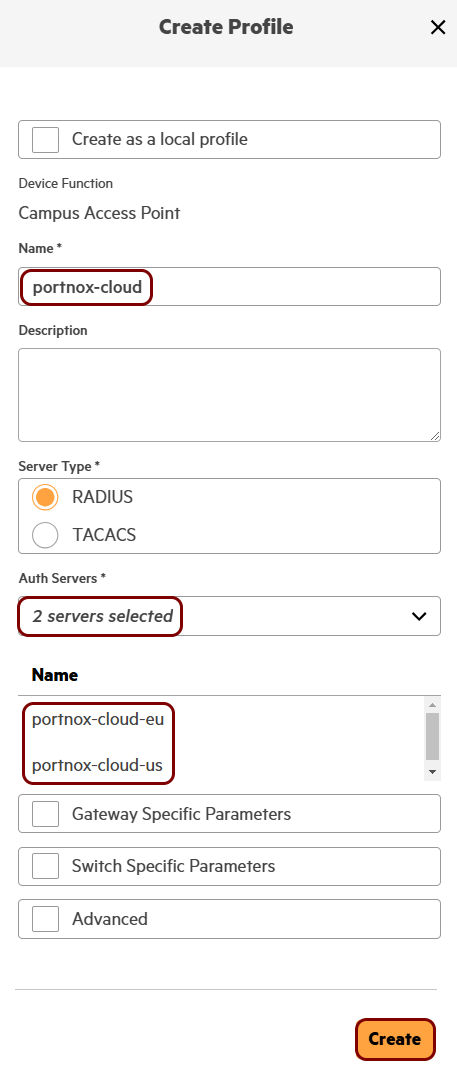
- In the Name field, enter a name for this server group.
- In the Auth Servers field, select the authentication server profiles that you created earlier, starting with the primary server.
- Click on the Create button.
Result: You created an authentication server group that contains the Portnox Cloud RADIUS servers.
Optional: Configure RadSec
Create RadSec server profiles
In this section, you will upload the Cloud RADIUS root certificate and create authentication server profiles that connect to Portnox Cloud RADIUS servers using RadSec.
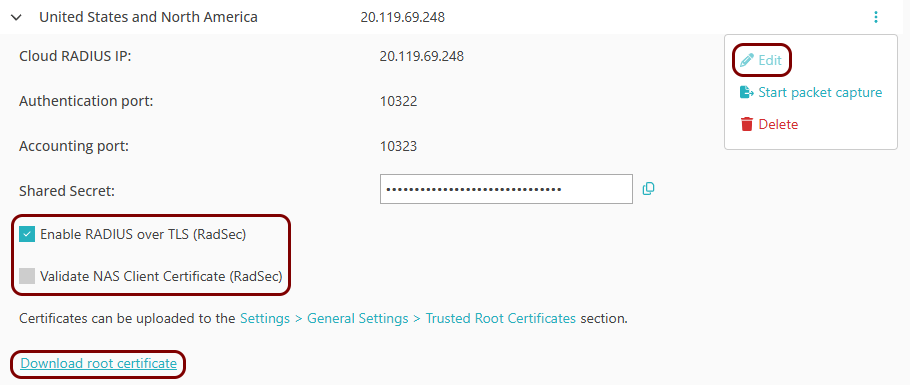
Before you begin, in Portnox Cloud, go to , select the relevant RADIUS instance, and select . Activate the Enable RADIUS over TLS (RadSec) option, disable the Validate NAS Client Certificate (RadSec) option, and click on the Save button.
Then, click on the Download root certificate link to download the Cloud RADIUS root certificate (DigiCert Trusted Root G4).
-
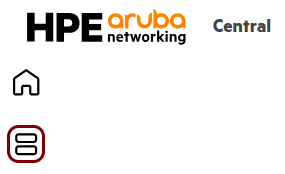
In HPE Aruba Networking Central, in the left-hand side toolbar, click on the Menu
icon.
-
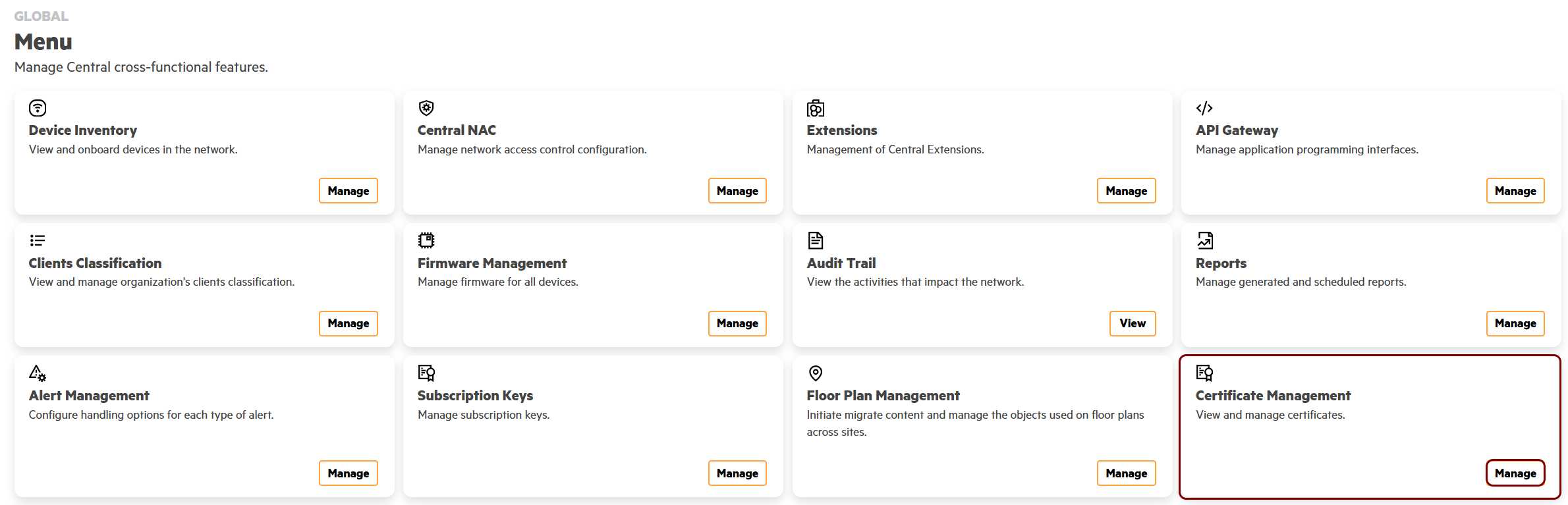
Click on the Manage button in the Certificate Management
card.
-
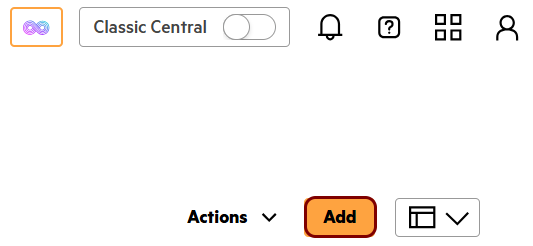
Click on the Add button to add a new certificate.
-
Upload the Cloud RADIUS root certificate:
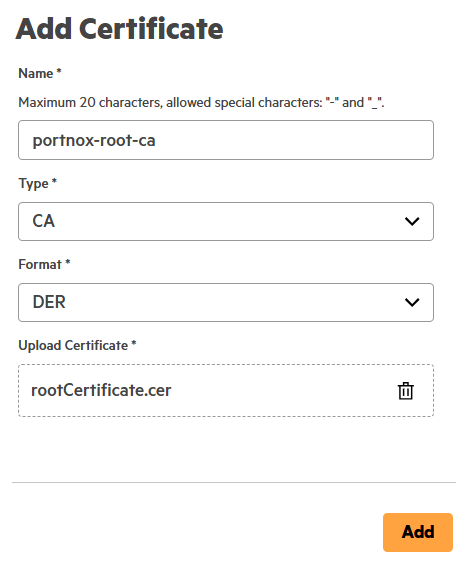
- In the Name field, enter a name for the certificate.
- In the Type field, select the CA option.
- In the Format field, select the DER option.
- In the Upload Certificate field, click on the Select File button, and select the root certificate that you downloaded from Portnox Cloud.
- Click on the Add button.
-
In HPE Aruba Networking Central, in the left-hand side toolbar, click on the Home
icon.
-
In HPE Aruba Networking Central, click on the Config tab in the top-right corner.
-
In the left-hand side menu, click on the Sites option, and then click on the name of your
site.
-
On the Profiles tab, in the Profiles Management pane, click on the
Authentication Server entry in the Security card.
-
Click on the Create Profile button to create a new authentication server profile.
-
Configure the new authentication server profile:
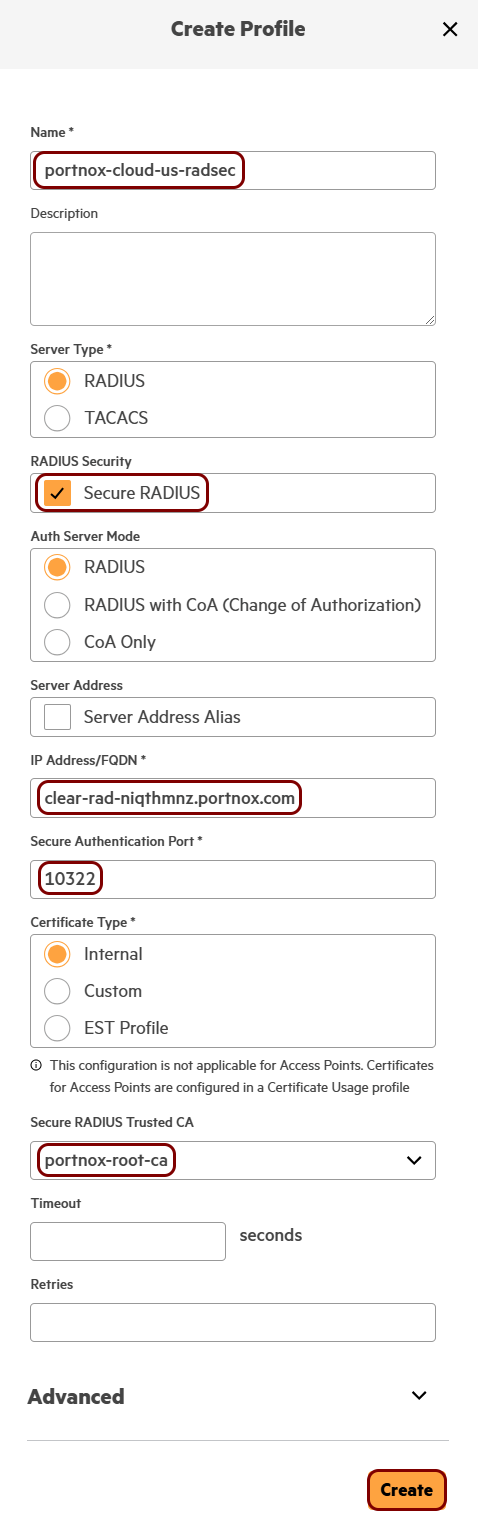
Result: You created an authentication server group for RadSec. When you configure an SSID, select this group in the Server Group field instead of the non-RadSec group.
Optional: Configure mutual authentication (mTLS)
In this section, you will create a client certificate for the access point and configure Portnox Cloud to verify it during the RadSec connection.
-
In HPE Aruba Networking Central, in the left-hand side toolbar, click on the Menu
icon.
-
Click on the Manage button in the Certificate Management
card.
-
Click on the Add button to add a new certificate.
-
Upload the client certificate:
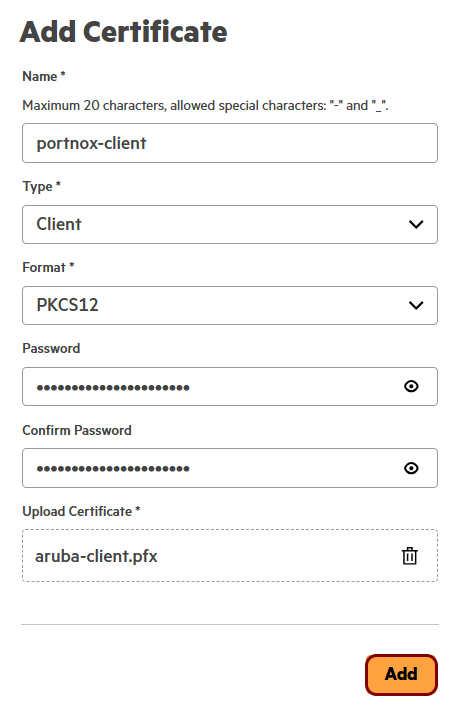
- In the Name field, enter a name for the certificate.
- In the Type field, select the Client option.
- In the Format field, select the PKCS12 option.
- In the Password and Confirm Password fields, enter the export password that you set earlier.
- In the Upload Certificate field, click on the Select File button, and select the aruba-client.pfx file.
- Click on the Add button.
-
In HPE Aruba Networking Central, in the left-hand side toolbar, click on the Home
icon.
-
In HPE Aruba Networking Central, click on the Config tab in the top-right corner.
-
In the left-hand side menu, click on the Sites option, and then click on the name of your
site.
-
On the Profiles tab, in the Profiles Management pane, click on the
Certificate Usage entry in the Security card.
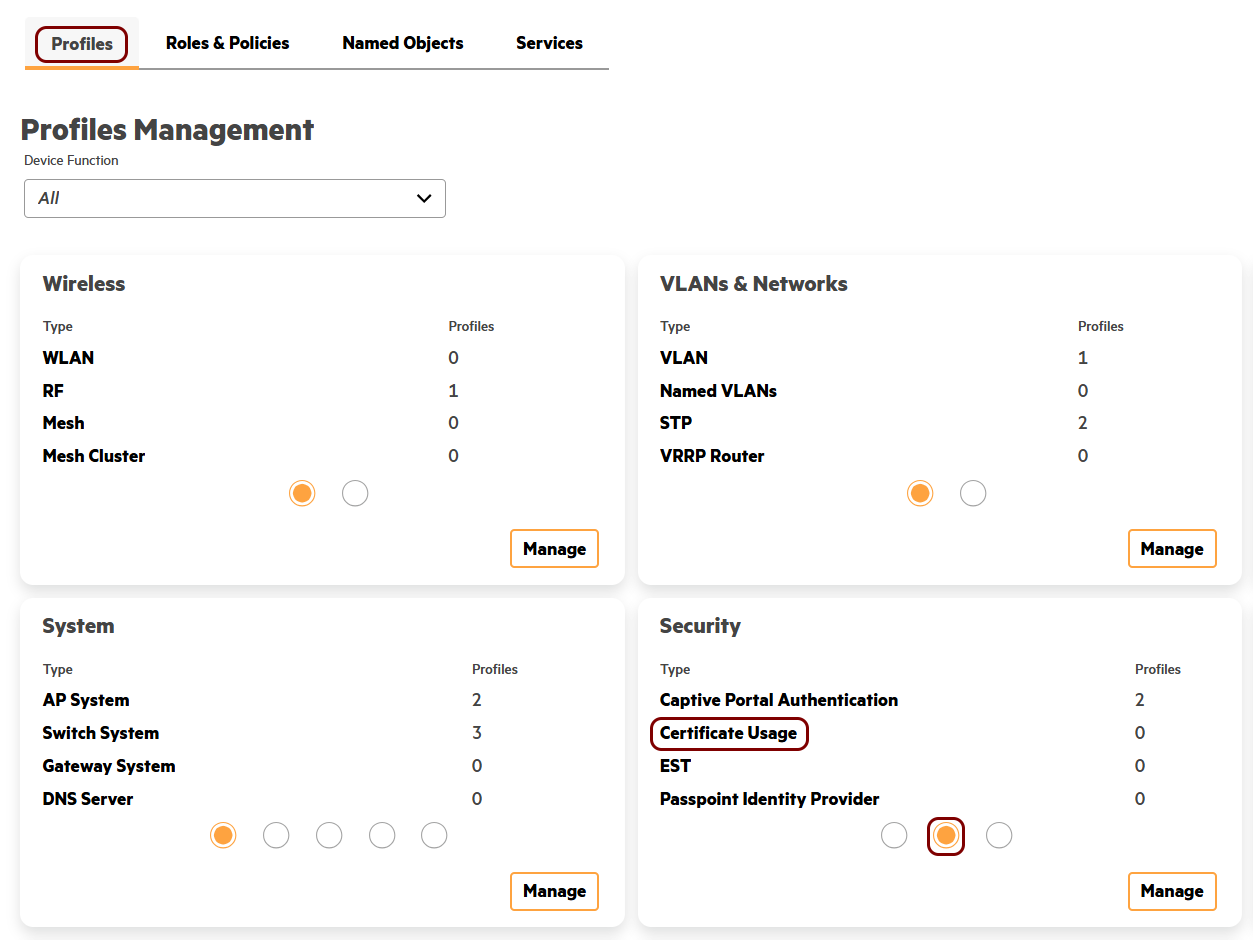 Note:If you do not see this entry, click on the second circle icon in the card to go to its second page.
 -
Click on the Create Profile button to create a new certificate usage profile.
-
Configure the new certificate usage profile:
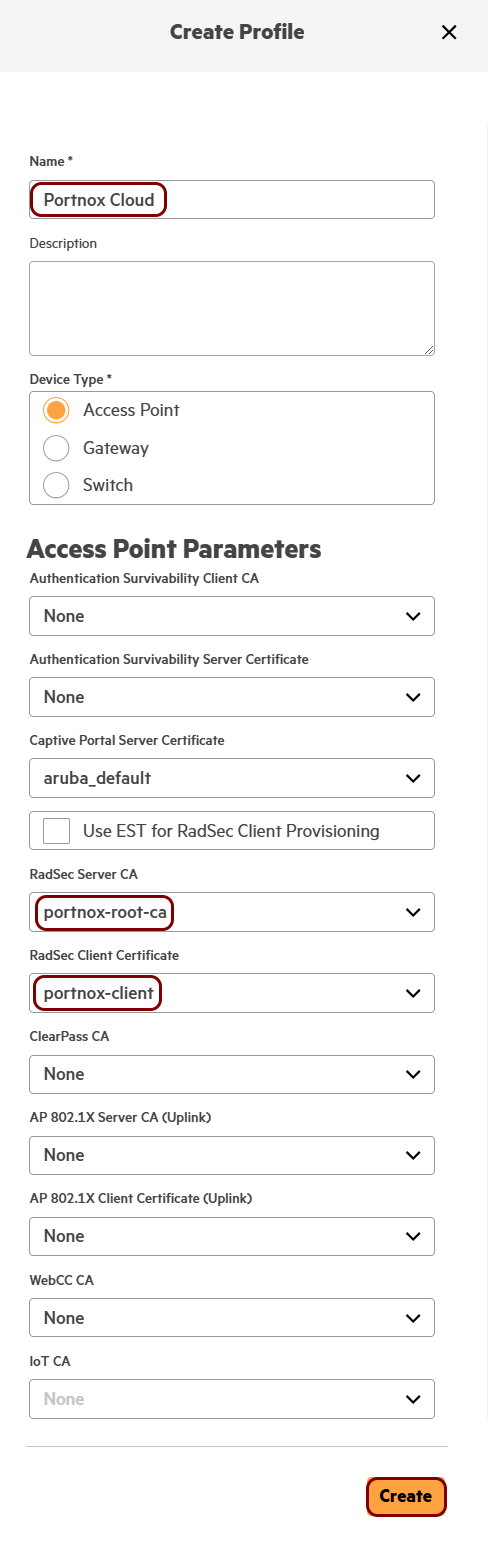
- In the Name field, enter a name for this profile.
- In the Device Type field, leave the Access Point option selected.
- In the RadSec Server CA field, select the Cloud RADIUS root certificate that you uploaded earlier.
- In the RadSec Client Certificate field, select the client certificate that you uploaded earlier.
- Leave the remaining fields at their default values, and click on the Create button.
-
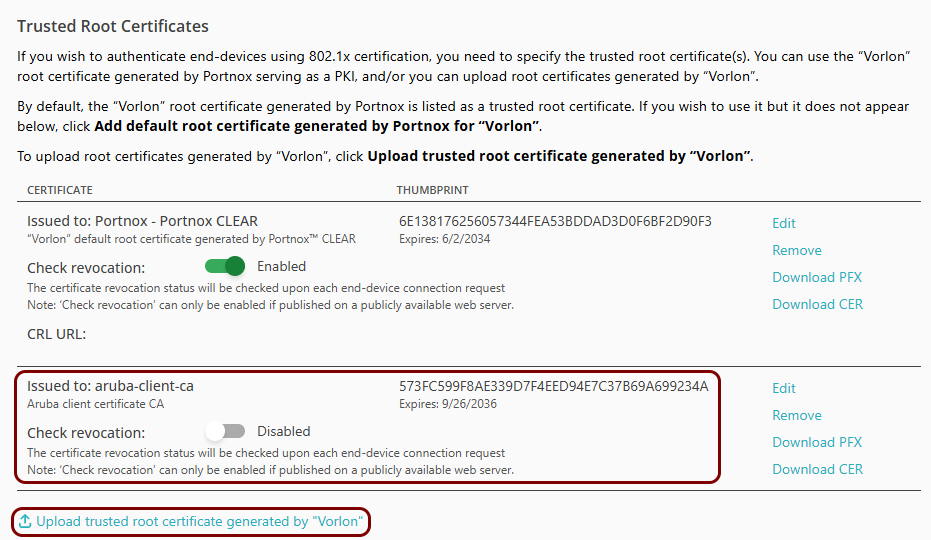
In Portnox Cloud, go to , and upload the aruba-client-ca.crt file.
-
Go to , select the relevant RADIUS instance, select , activate the Validate NAS Client Certificate (RadSec) option, and click
on the Save button.
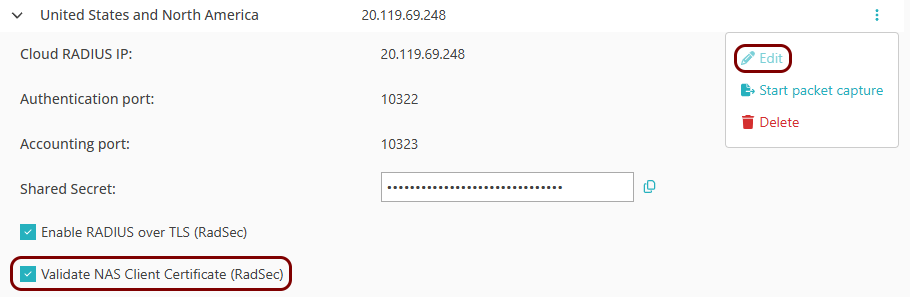 Important:Complete this step only after HPE Aruba Networking Central has pushed the new configuration to the access point. Otherwise, the RadSec connection fails until the access point receives the client certificate.
Result: The access point and Portnox Cloud authenticate each other when the access point connects using RadSec. SSIDs that use the RadSec server group need no changes. They start using mutual authentication as soon as you save the Portnox Cloud setting.
Create an SSID for 802.1X authentication
In this section, you will create a WLAN profile and configure it for WPA2 Enterprise authentication, using the authentication server group that you created earlier.
-
In HPE Aruba Networking Central, click on the Config tab in the top-right corner.
-
In the left-hand side menu, click on the Sites option, and then click on the name of your
site.
-
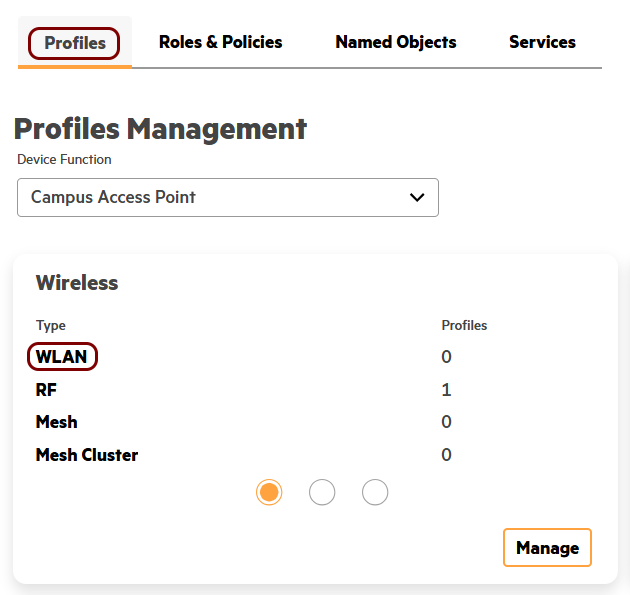
On the Profiles tab, in the Profiles Management pane, click on the
WLAN entry in the Wireless card.
-
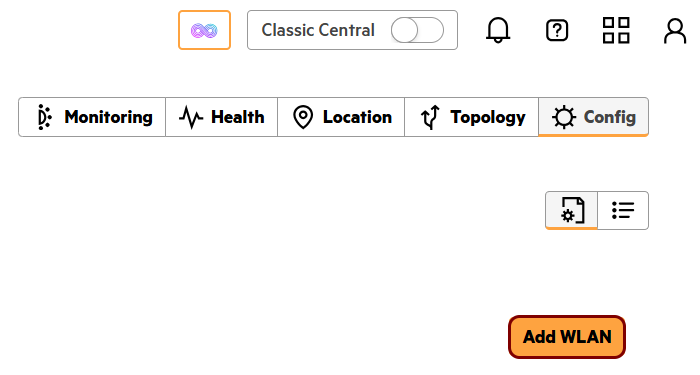
Click on the Add WLAN button to create a new WLAN profile.
-
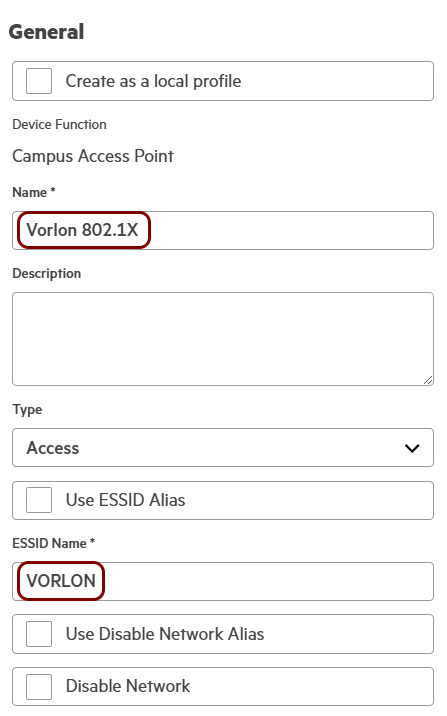
In the General section, in the Name field, enter a display name for
this profile, and in the ESSID Name field, enter the network name that devices see when they
search for Wi-Fi networks.
-
In the Security section:
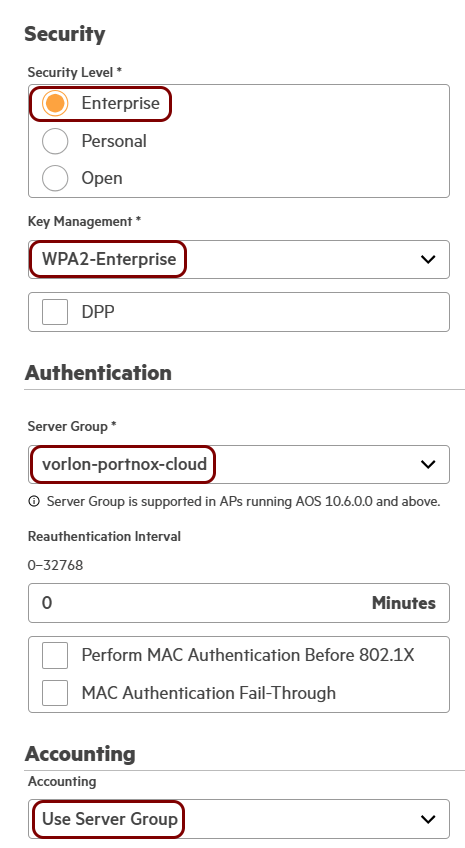
Result: You created an SSID that authenticates employee Wi-Fi devices using 802.1X and the Portnox Cloud RADIUS servers.
Optional: Create an SSID for MAC-based authentication
This is an optional task. Follow this task only if you want to authenticate devices, such as IoT devices, that do not support 802.1X, using their MAC address instead.
-
In HPE Aruba Networking Central, click on the Config tab in the top-right corner.
-
In the left-hand side menu, click on the Sites option, and then click on the name of your
site.
-
On the Profiles tab, in the Profiles Management pane, click on the
WLAN entry in the Wireless card.
-
Click on the Add WLAN button to create a new WLAN profile.
-
In the General section, in the Name field, enter a display name for
this profile, and in the ESSID Name field, enter the network name that devices see when they
search for Wi-Fi networks. Then, in the Bands section, deactivate the 6
GHz checkbox and in the Wi-Fi Protocols section, deactivate the
Wi-Fi 7 (802.11be) checkbox.
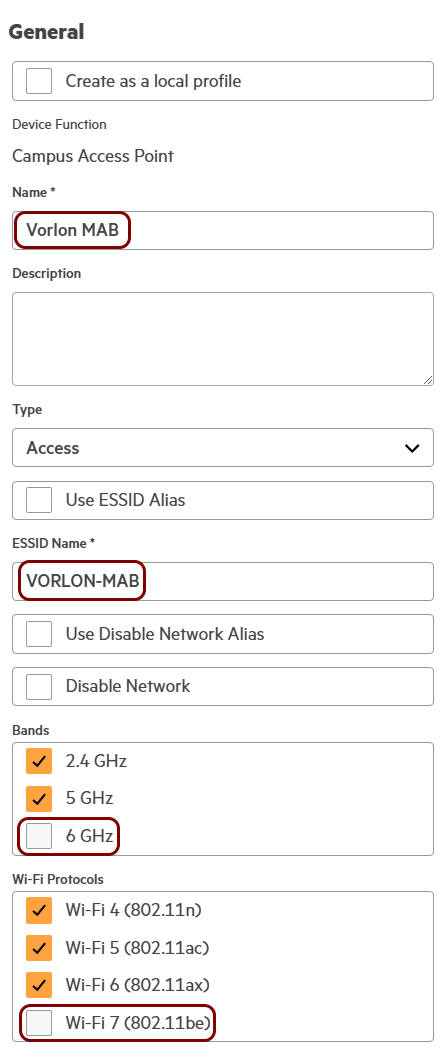 Note:If 6 GHz is selected in the Bands section or if Wi-Fi 7 (802.11be) is selected in the Wi-Fi Protocols section, the Open option is not available in the Key Management field.
 -
In the Security section:
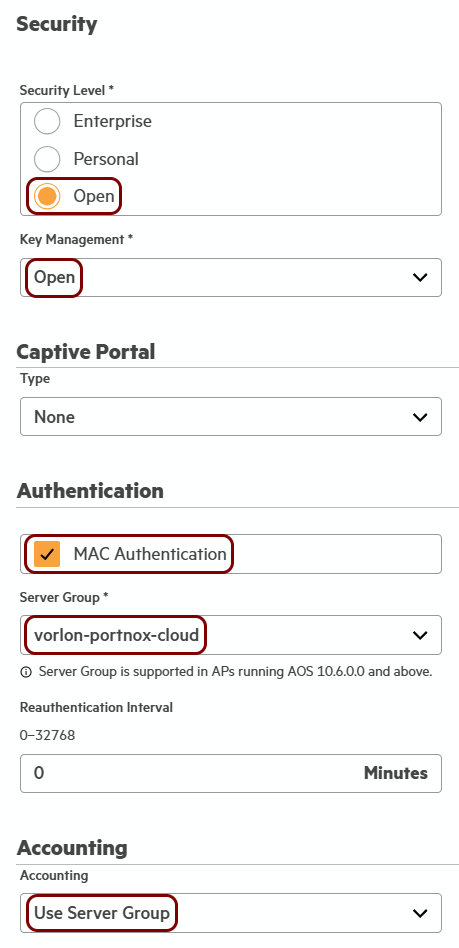
Result: You created a separate SSID that authenticates IoT devices by their MAC address using the Portnox Cloud RADIUS servers on the basis of MAC-based accounts.
Optional: Create an SSID for IPSK authentication
This is an optional task. Follow this task only if you want to authenticate devices using RADIUS-based identity pre-shared keys (IPSK). HPE Aruba Networking Central calls this feature MPSK (Multi Pre-Shared Key).
For more information about IPSK in Portnox Cloud, see the following topic: Create a MAC-based account.
-
In HPE Aruba Networking Central, click on the Config tab in the top-right corner.
-
In the left-hand side menu, click on the Sites option, and then click on the name of your
site.
-
On the Profiles tab, in the Profiles Management pane, click on the
WLAN entry in the Wireless card.
-
Click on the Add WLAN button to create a new WLAN profile.
-
In the General section, in the Name field, enter a display name for
this profile, and in the ESSID Name field, enter the network name that devices see when they
search for Wi-Fi networks. Then, in the Bands section, deactivate the 6
GHz checkbox and in the Wi-Fi Protocols section, deactivate the
Wi-Fi 7 (802.11be) checkbox.
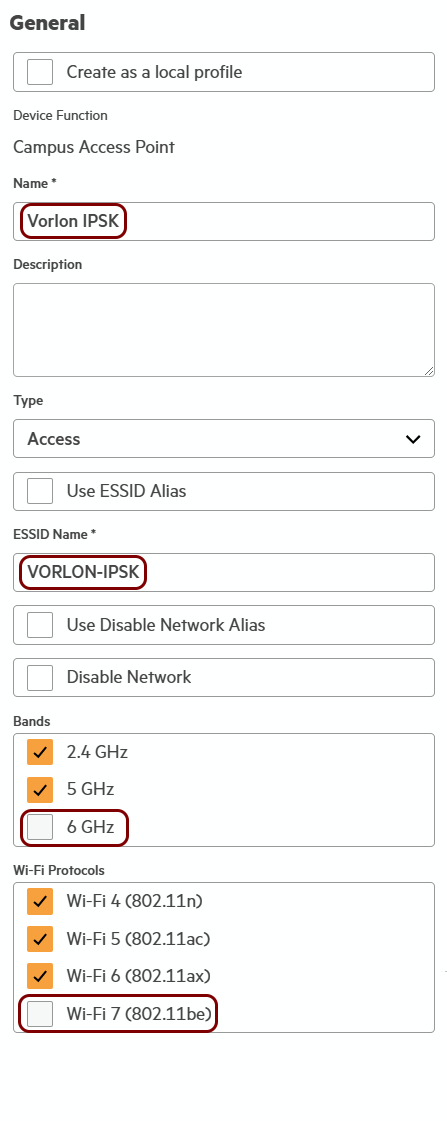 Note:If 6 GHz is selected in the Bands section or if Wi-Fi 7 (802.11be) is selected in the Wi-Fi Protocols section, the MPSK AES option is not available in the Key Management field.
 -
In the Security section:
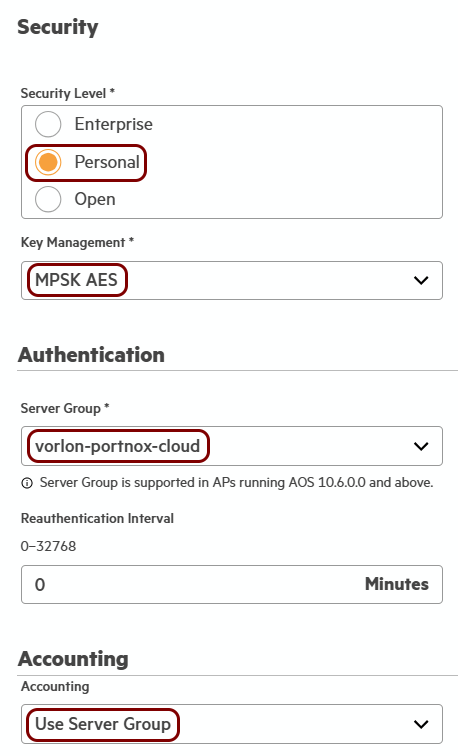
Result: You created a separate SSID that authenticates devices using identity pre-shared keys from Portnox Cloud.
Legacy solutions
Classic Central WPA2 Enterprise
In this section, you will learn how to configure access points managed using Aruba Central to work together with Portnox™ Cloud and 802.1X RADIUS authentication for Wi-Fi connections.
-
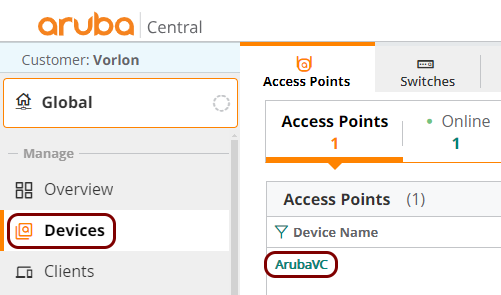
In the left-hand side main menu, click on the Devices option and then, in the right-hand
side pane, click on the name of the device that you want to configure.
-
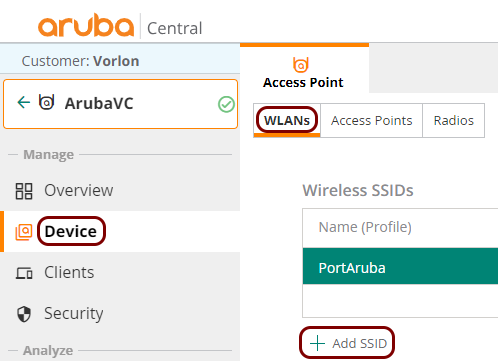
In the left-hand side menu for the selected device, click on the
Device option. Then, in the right-hand side pane, make sure that the
WLANs tab is active, and under the Wireless SSIDs list, click
on the Add SSID button to add a new SSID.
 Note:You can also edit an existing SSID by clicking on its name on the Wireless SSIDs list.
 -
In the Security step:
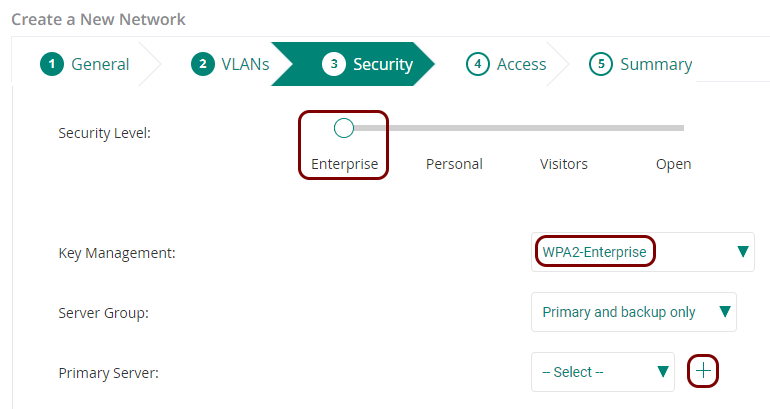
- Set the Security Level slider to the Enterprise position.
- In the Key Management field, select the preferred key management protocol.
- Click on the + icon to the right of the Primary Server label to create a RADIUS server configuration.
-
In the New Server window:
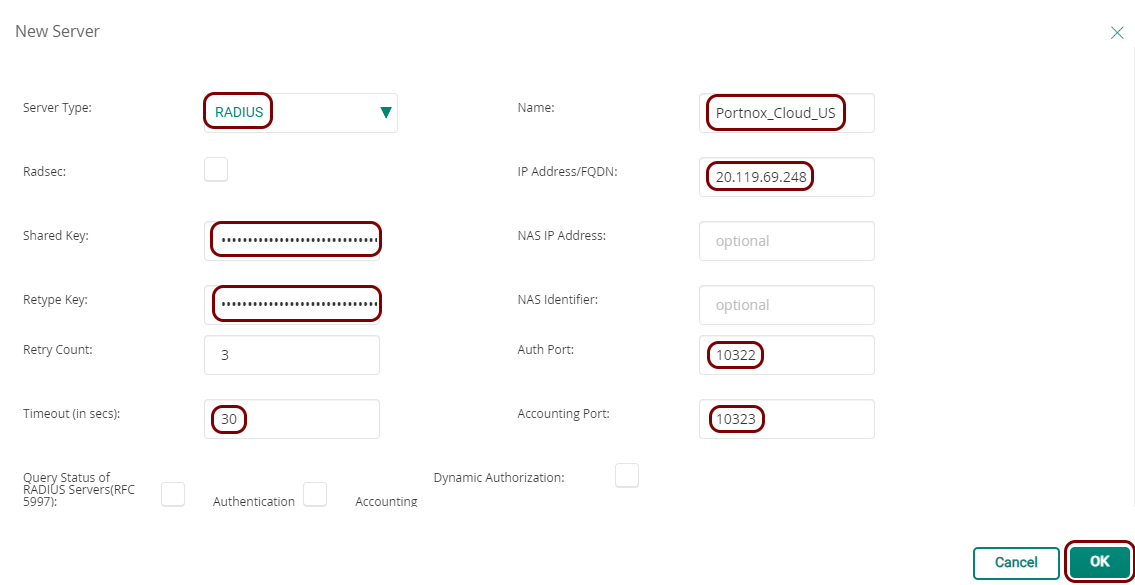
- In the Server Type field, select the RADIUS option.
- In the Name field, enter a name for this RADIUS server configuration.
- In the IP Address/FQDN field, enter your Cloud RADIUS IP, which you obtained when you created the Cloud RADIUS server.
- In the Shared Key and Retype Key fields, paste your Shared Secret, also obtained when you created the Cloud RADIUS server.
- In the Auth Port field, enter your Authentication port number, also obtained when you created the Cloud RADIUS server.
- In the Accounting Port field, enter your Accounting port number, also obtained when you created the Cloud RADIUS server.
- In the Timeout (in secs) field, enter 30 to avoid timeouts due to any intermittent Internet connection delays.
- Click on the OK button to save your configuration.
- Optional:
Back in the Create a New Network wizard’s Security step, click on
the + icon to the right of the Secondary Server
label to create a second RADIUS server configuration.
 Note:Do this only if your Portnox Cloud tenant is configured with two Cloud RADIUS servers or if you’re using a local RADIUS server in addition to the Cloud RADIUS server.
Classic Central Identity PSK (IPSK)
In this section, you will learn how to configure access points managed using Aruba Central to work together with Portnox™ Cloud and RADIUS-based identity pre-shared key (IPSK) authentication for Wi-Fi connections.
For more information about IPSK in Portnox Cloud, see the following topic: Create a MAC-based account.
-
In the left-hand side main menu, click on the Devices option and then, in the right-hand
side pane, click on the name of the device that you want to configure.
-
In the left-hand side menu for the selected device, click on the
Device option. Then, in the right-hand side pane, make sure that the
WLANs tab is active, and under the Wireless SSIDs list, click
on the Add SSID button to add a new SSID.
Important:You cannot use the same SSID for both WPA2/WPA3 Enterprise authentication and IPSK authentication, so you need to create separate SSIDs.Note:You can also edit an existing SSID by clicking on its name on the Wireless SSIDs list.
-
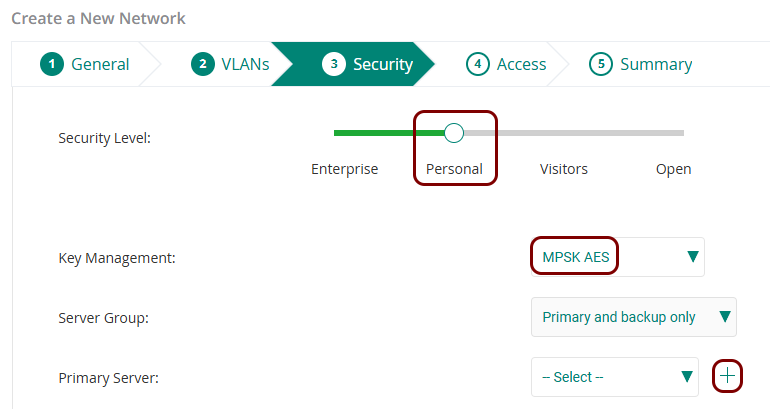
In the Security step:
-
In the New Server window:
- In the Server Type field, select the RADIUS option.
- In the Name field, enter a name for this RADIUS server configuration.
- In the IP Address/FQDN field, enter your Cloud RADIUS IP, which you obtained when you created the Cloud RADIUS server.
- In the Shared Key and Retype Key fields, paste your Shared Secret, also obtained when you created the Cloud RADIUS server.
- In the Auth Port field, enter your Authentication port number, also obtained when you created the Cloud RADIUS server.
- In the Accounting Port field, enter your Accounting port number, also obtained when you created the Cloud RADIUS server.
- In the Timeout (in secs) field, enter 30 to avoid timeouts due to any intermittent Internet connection delays.
- Click on the OK button to save your configuration.
- Optional:
Back in the Create a New Network wizard’s Security step, click on
the + icon to the right of the Secondary Server
label to create a second RADIUS server configuration.
Note:Do this only if your Portnox Cloud tenant is configured with two Cloud RADIUS servers or if you’re using a local RADIUS server in addition to the Cloud RADIUS server.
Aruba 7000 Series
In this section, you will learn how to configure Aruba 7000 series of controllers with the ArubaOS operating system to work together with Portnox™ Cloud and 802.1X RADIUS authentication for Wi-Fi connections.
-
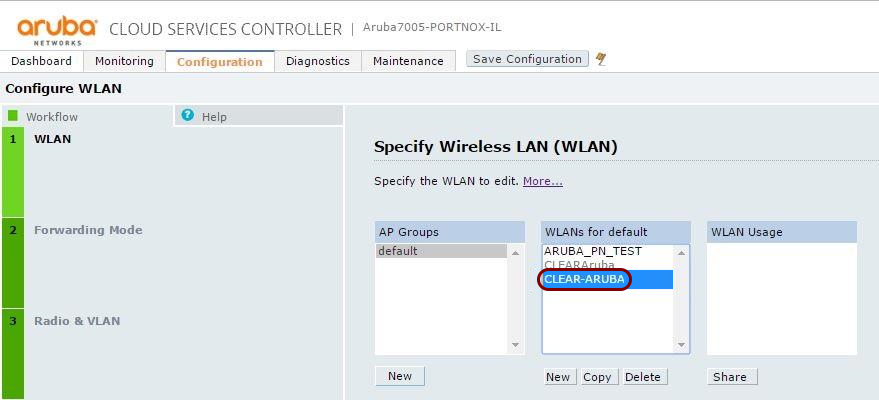
In the Aruba web interface, navigate to , and add a new SSID or select an existing one.
-
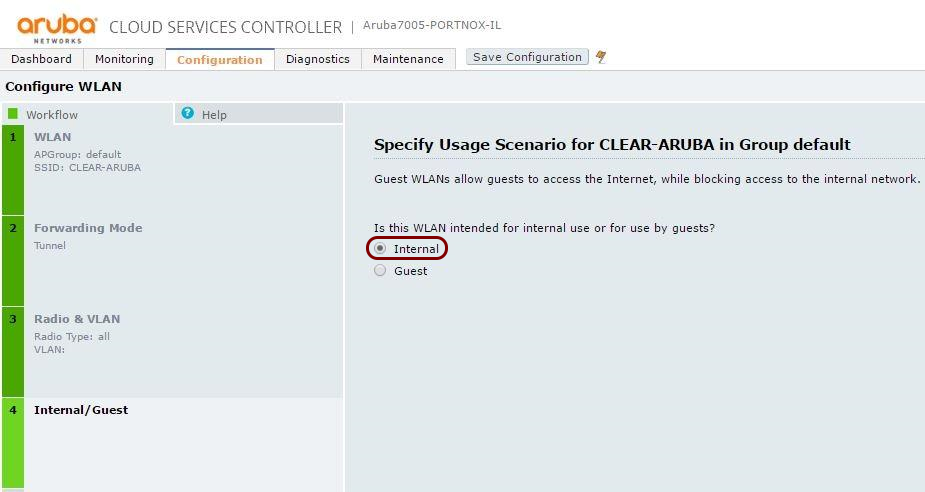
In the Internal/Guest section, select Internal.
-
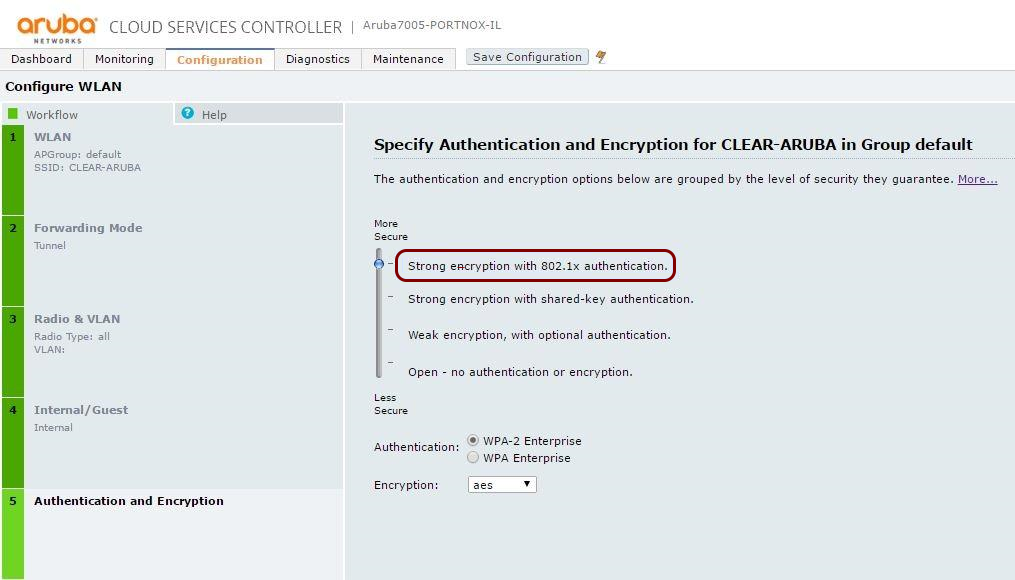
In the Authentication and Encryption section, select Strong encryption with
802.1x authentication.
-
In the Authentication Server section, add a new server.
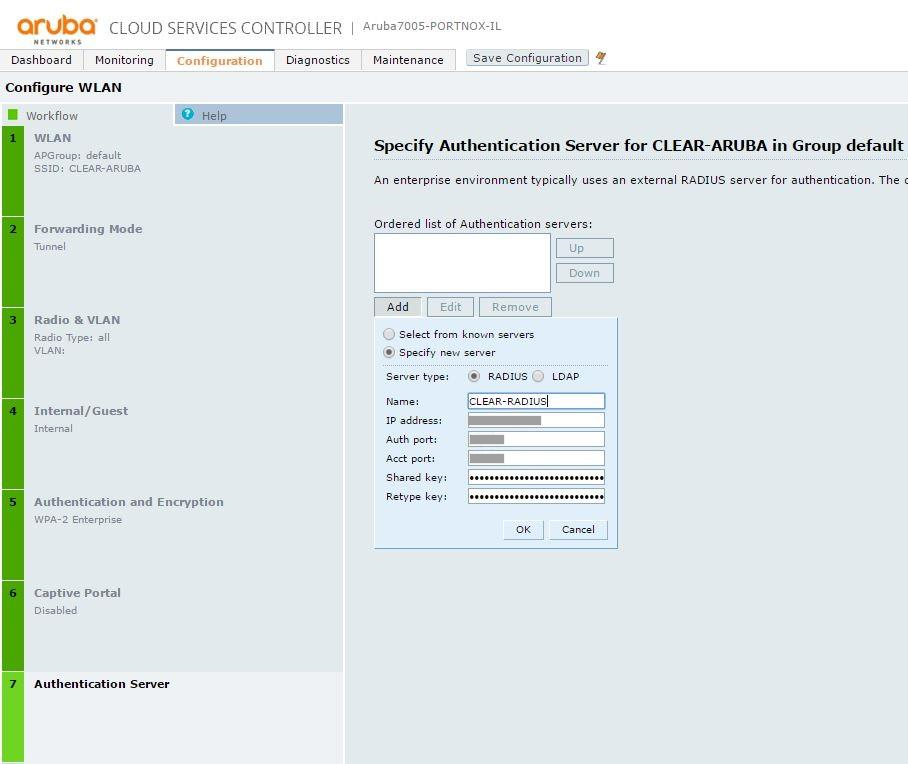
- In Server type, select RADIUS.
- Enter your Cloud RADIUS details.
-
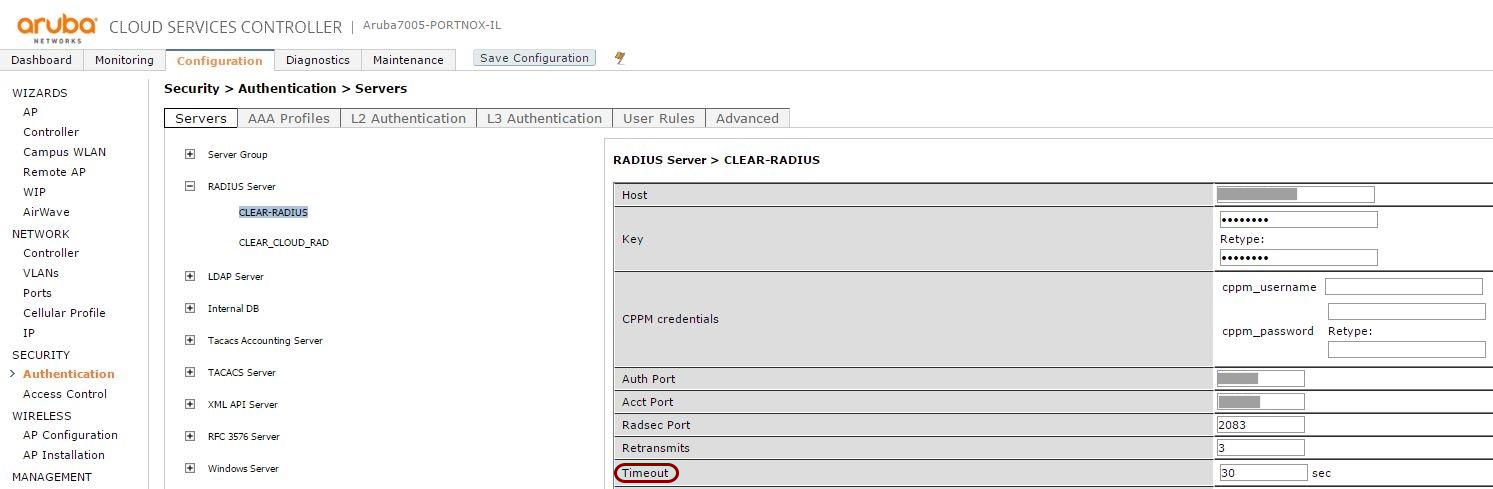
Navigate to , select the RADIUS server that you created in the previous step, and update the
Timeout to 30 seconds.